Chimney Counter Flashing
Where a masonry chimney meets the roof is a common place for water to enter if metal flashing is missing, short, rusted, or poorly sealed. This page explains counter flashing in plain language so you can ask better questions before repair work begins.
Counter flashing vs. roof, base, and step flashing
- Roof / base flashing — metal that sits on the roof surface and turns up against the chimney.
- Step flashing — individual pieces that step up along a sloped roof line beside the chimney.
- Counter flashing — metal that covers the upturned roof or step flashing and is let into (or carefully sealed against) the chimney masonry so water sheds over the joint instead of behind it.
On many homes, CRS installs new counter flashing over the existing roof flashing to create a watertight barrier at that joint, directs water away from vulnerable areas, and includes professional sealing. Pricing for that service is listed on our homepage as Chimney (Counter) Flashing $280+—we do not invent other prices here.
Leaks near the chimney
Stains on the ceiling, wet insulation, or damp masonry near the chase can point to the chimney–roof joint—but the same symptoms can also come from roof covering failure, failed step flashing, a cracked crown, open mortar joints, or interior condensation. A flashing repair can stop leaks that start at that joint; it is not a guarantee that every leak in the house will be fixed. Diagnosis should match the water path you actually have.
Qualified work—not a DIY shortcut
Counter flashing has to suit the roof type, chimney masonry, and how the existing metals are detailed. Cutting into brick or shingles the wrong way can create new leaks. This is qualified trade work. If you are unsure what you are looking at, request an on-site look rather than forcing a one-size metal piece.
Example photo
This image is already on our website files. It shows flashing metal at a chimney-to-roof connection for reference; it is not a promise about any specific job result.
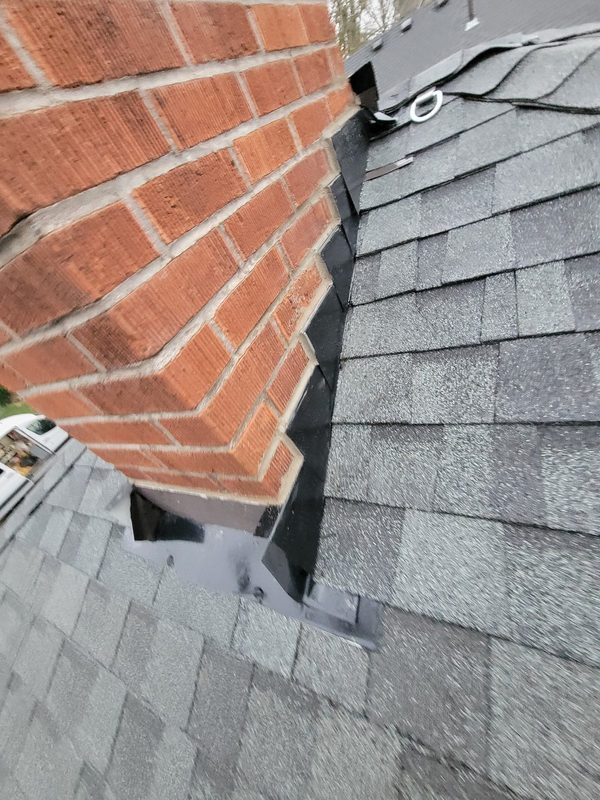
Flashing work: before and after
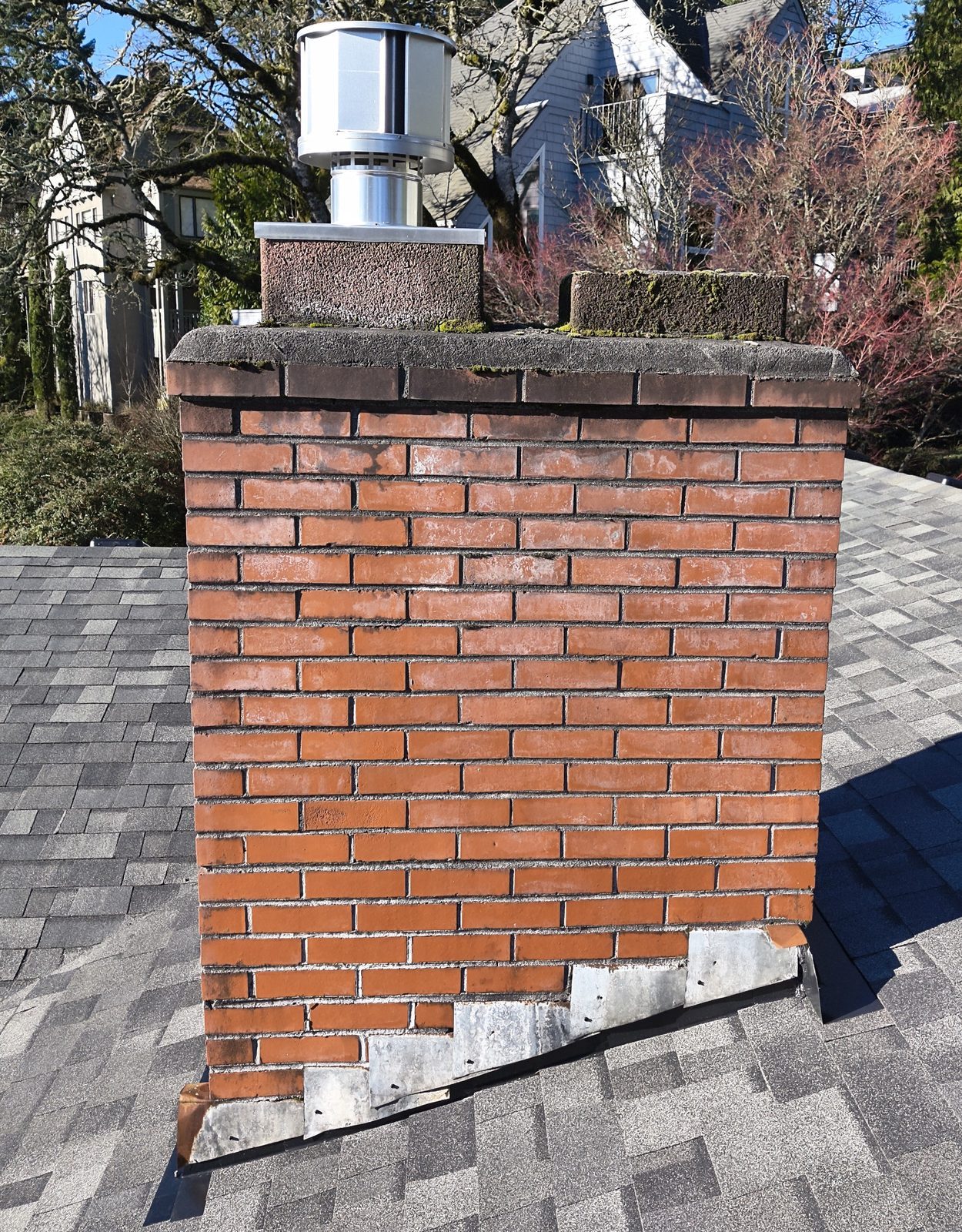
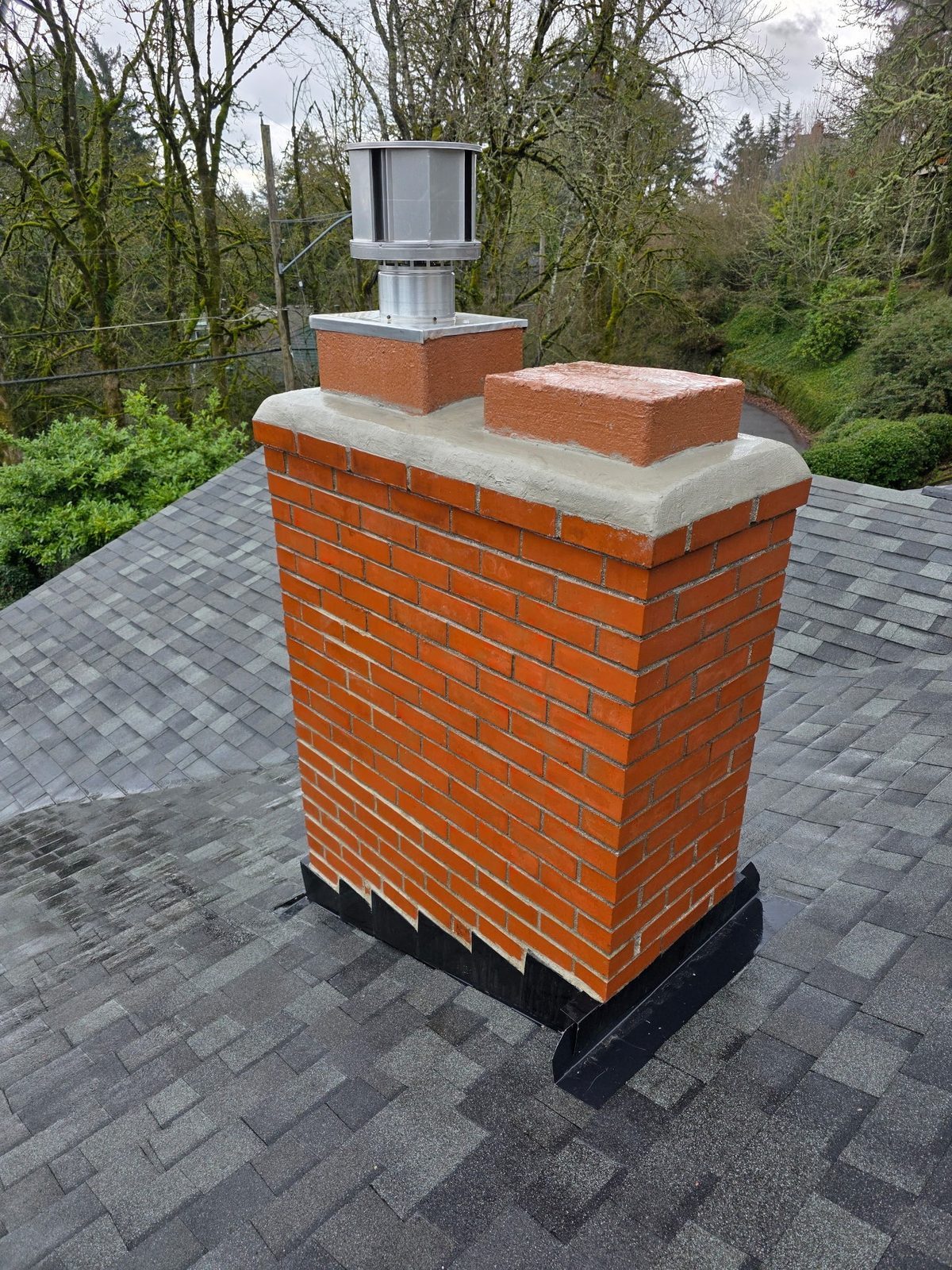
Another flashing before-and-after
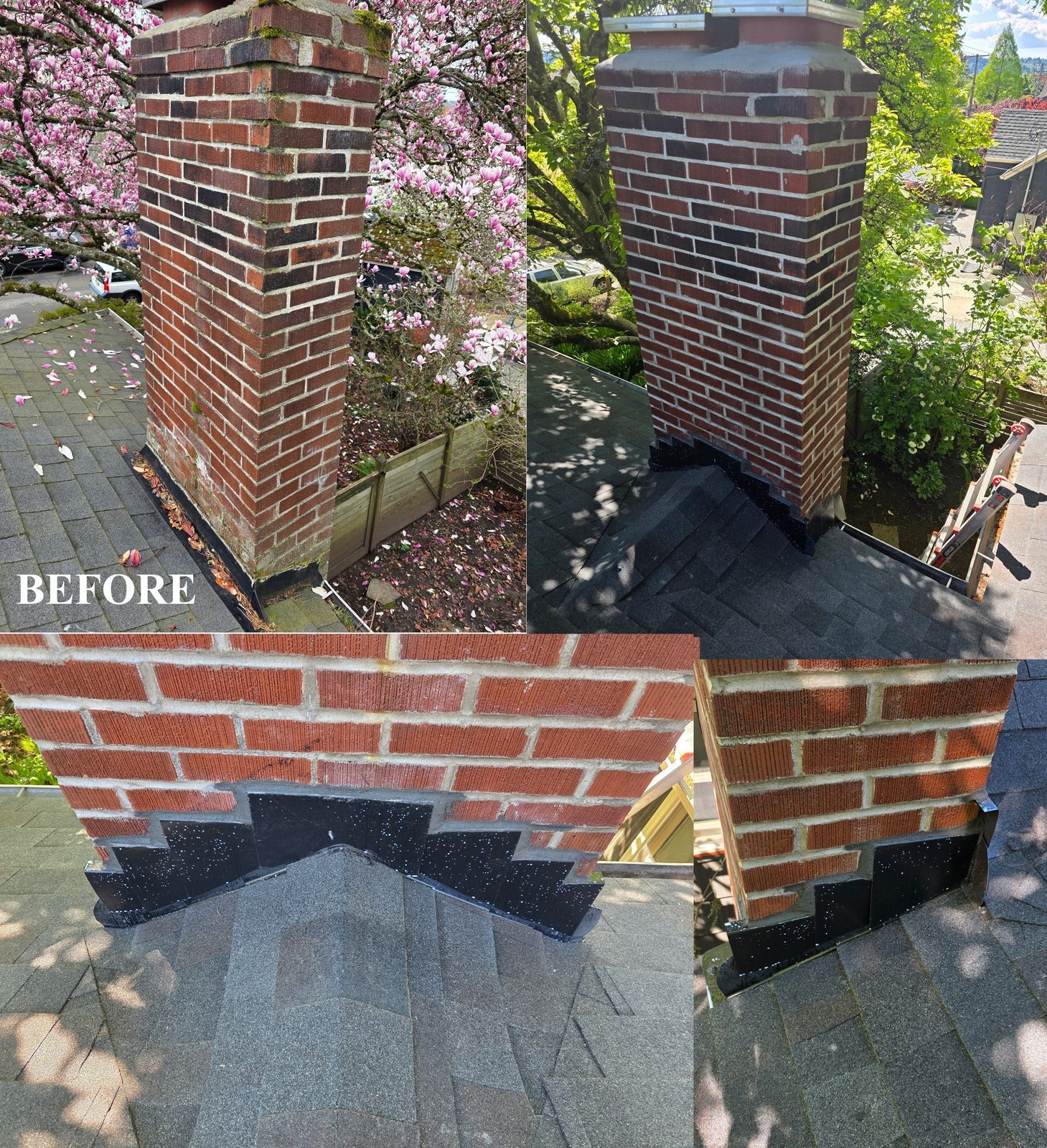
Questions to ask before work starts
- Is the plan to install counter flashing over the existing roof flashing, or is more of the flashing system involved?
- What sealing or masonry integration is included in the written scope?
- Could the crown, rain cap, or open mortar also be contributing—and should those be checked at the same visit? (See cement crowns and flue tiles.)
- Will any roofing coordination or permit be needed for this scope?
Request a quote
Use our contact form and include your address plus what you are seeing (ceiling stains, exterior rust, etc.). Or call (503) 933-5828.