Unlined Masonry Fireplaces: What Homeowners and Realtors Should Know
Many older masonry fireplaces were built with brick and mortar as the flue path—or with clay liners that later cracked, separated, or failed. A quiet home inspection at purchase does not always mean the flue was camera-checked or that lining was verified for intended use. That gap is where sticker shock and distrust often start.
This page is educational. It is not a verdict on any specific house. Recommendations depend on site inspection, the code edition that applies to any permitted work, appliance listing and manufacturer instructions, and the local building official.
Oregon Chapter 10 lining basics (accessible 2023 ORSC text)
Accessible Oregon Residential Specialty Code Chapter 10 text includes:
- R1003.11 — Masonry chimneys shall be lined. The lining material shall be appropriate for the type of appliance connected, in accordance with the appliance listing and manufacturer’s instructions.
- R1003.11.1 — Flue lining systems for residential-type appliances may include clay flue lining complying with ASTM C315; listed and labeled chimney lining systems complying with UL 1777; factory-built chimneys or chimney units listed for installation within masonry chimneys; or other approved materials that resist flue gases and condensate at high temperature.
- R1003.12 — Installation requirements for clay flue lining (including that, for fireplaces, clay liners generally extend from the top of the smoke chamber upward).
Code-recognized lining is not “stainless only.” Clay is expressly recognized. Listed metal lining systems are a common retrofit option when clay cannot be restored—not a universal requirement for every flue.
As of November 5, 2026: Oregon’s 2026 ORSC Chapter 1 (administration) is effective. Construction provisions (Chapters 2–44, including Chapter 10) are in a phase-in period and become mandatory April 1, 2027; during phase-in, the 2023 or 2026 construction provisions may apply depending on the permit path. Confirm the edition that governs your project with the local building department. Official adoption information: Oregon BCD — ORSC adoption.
Why past “silence” does not mean “all clear”
- Oregon certified home inspectors observe chimneys where readily visible, but are not required to observe the interior of flues, and are not required to report whether a home meets building codes.
- Chimney specialists commonly use industry inspection practice based on NFPA 211 (including deeper camera checks). NFPA 211 is a widely used national standard in the chimney trade. Oregon’s Residential Specialty Code (ORSC) Chapter 10 separately states lining rules for masonry chimneys in residential construction. Those are related but not identical topics.
- A home sale does not, by itself, automatically mean every existing chimney must be rebuilt to today’s new-construction details. When lining or related alteration is proposed, the new work is evaluated under the rules that apply to that permit—confirm with your contractor and local building department. This page does not claim that every older unlined chimney automatically violates currently enforceable law.
Bare brick vs. clay liner vs. listed metal retrofit
- Bare brick/mortar flue — Exhaust contacts masonry; often discovered only with camera inspection.
- Clay tile liner — Traditional lined flue when continuous and intact.
- Listed metal / UL 1777 lining system — Common retrofit when clay cannot be restored; must follow the listing and instructions.
Why some fireplace liner projects become large in scope
Relining a fireplace chimney is often more than “slide a pipe up the flue.” Depending on findings, scope may include a listed liner; access through the firebox and smoke chamber (sometimes requiring demolition and reconstruction); possible removal and replacement of a chimney crown/wash so the liner can terminate correctly; and related masonry, caps, permits, and labor.
Severe offsets in some chimneys are sometimes discussed in the trade as requiring special access paths. That is a general construction possibility—not a claim about any specific CRS job example on this site.
Once work opens the system, further damage may appear that a camera could not fully confirm. That is a possibility, not a certainty. Ask any contractor how they will show new findings and agree on revised written scope before additional work proceeds.
A $10,000+ figure is a real-world example of how large fireplace lining plus rebuild scope can get on some homes. It is not a minimum, maximum, or estimate for your house.
Before you sell (or buy)
- Have the flue camera-inspected if lining condition is unknown—especially before listing.
- Ask whether the flue is lined, with what material, and whether the liner appears continuous and appropriate for intended use.
- If lining is recommended, ask what access path is planned and what is included versus unknown until work opens the system.
- Clarify permit expectations with the contractor and local building department.
- Do not assume a prior general home inspection settled chimney lining questions.
Questions to ask any contractor
- What inspection level did you perform, and did you video-scan the flue?
- Is the flue currently lined? With clay, a listed metal system, or neither?
- For this fireplace, does lining require firebox and/or crown work? Why?
- What is in the written scope, and how will new findings during work be handled?
- Which code edition and listing (for example clay ASTM C315 or UL 1777) will the finished system meet?
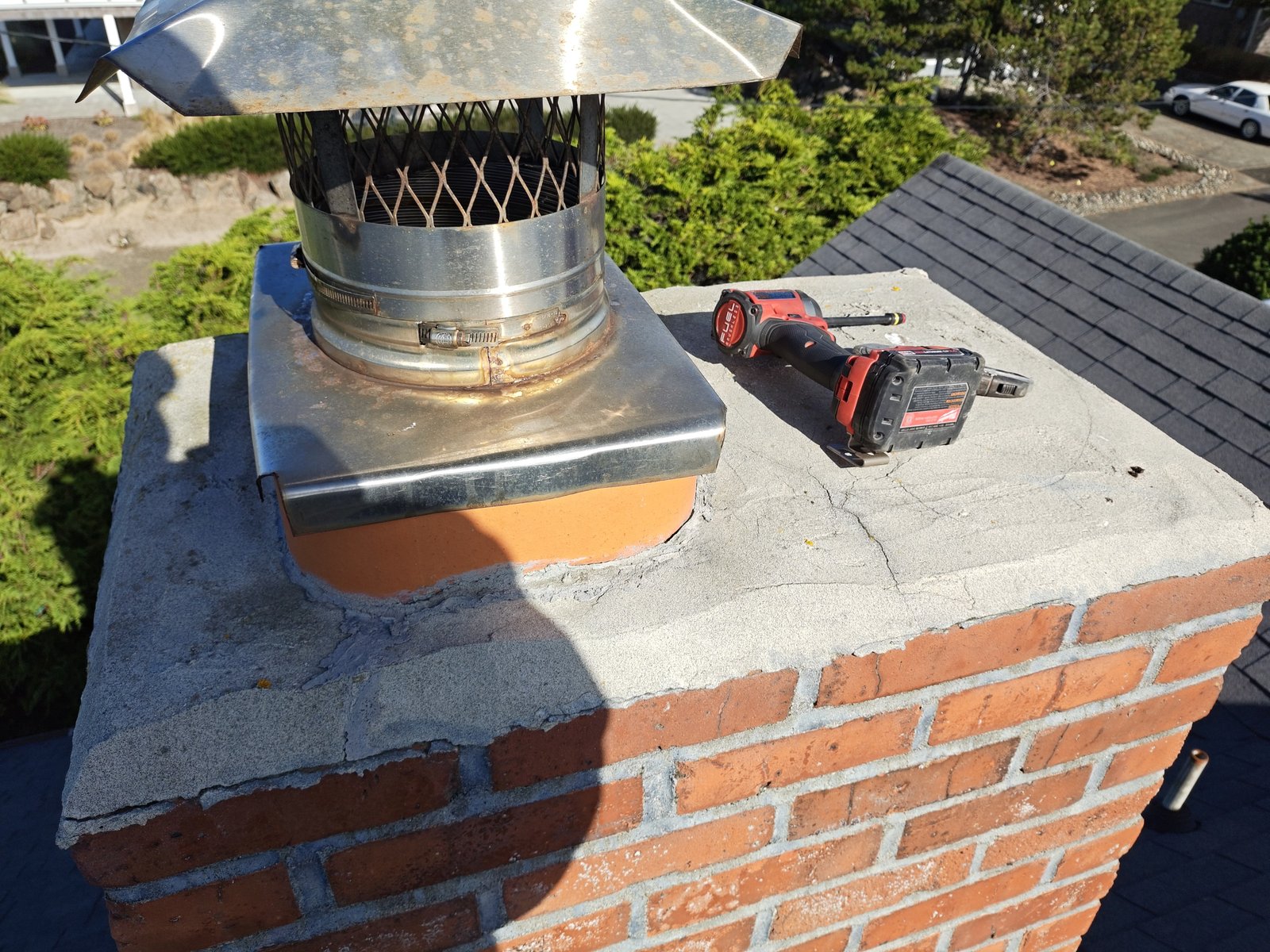
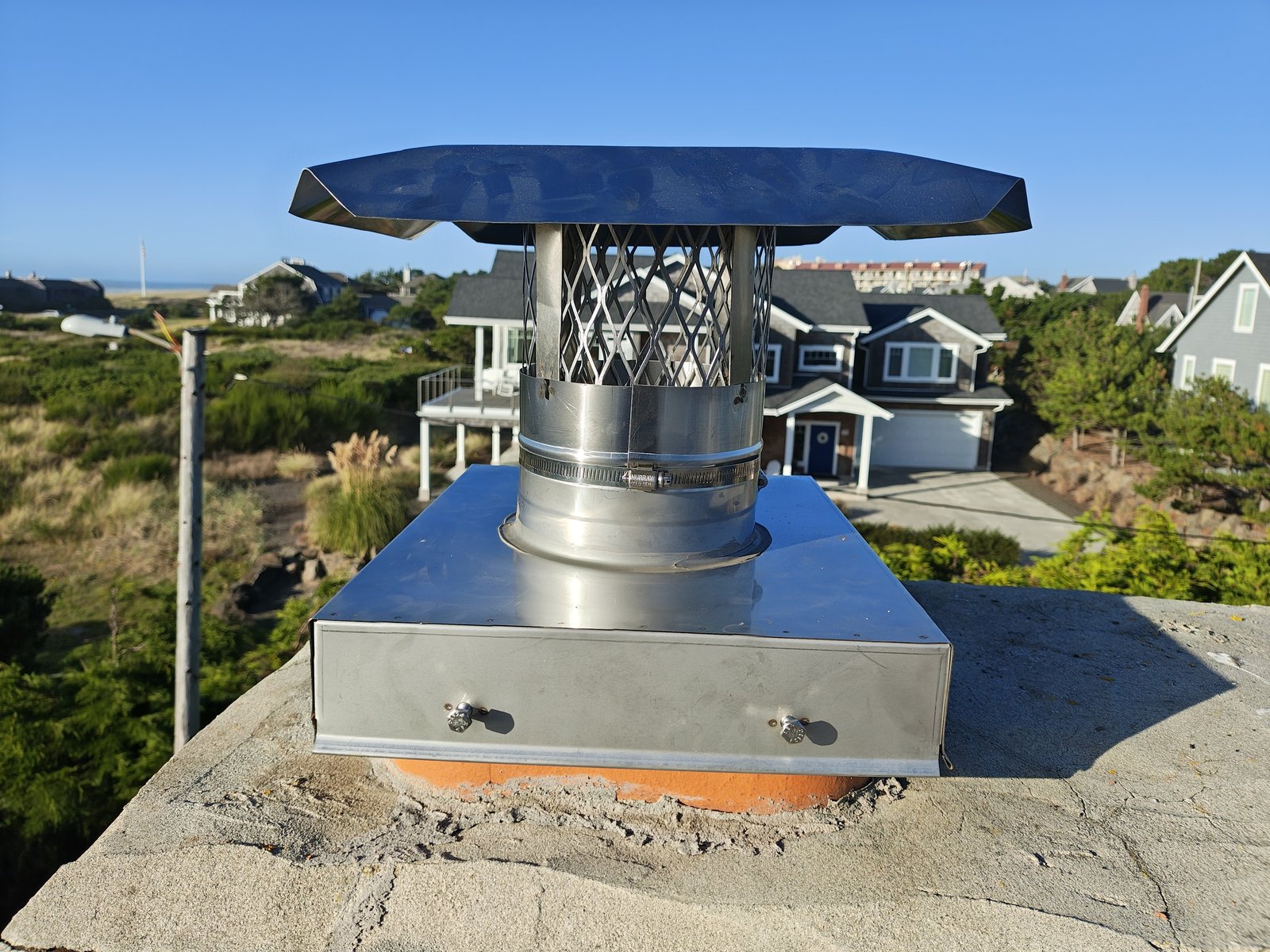
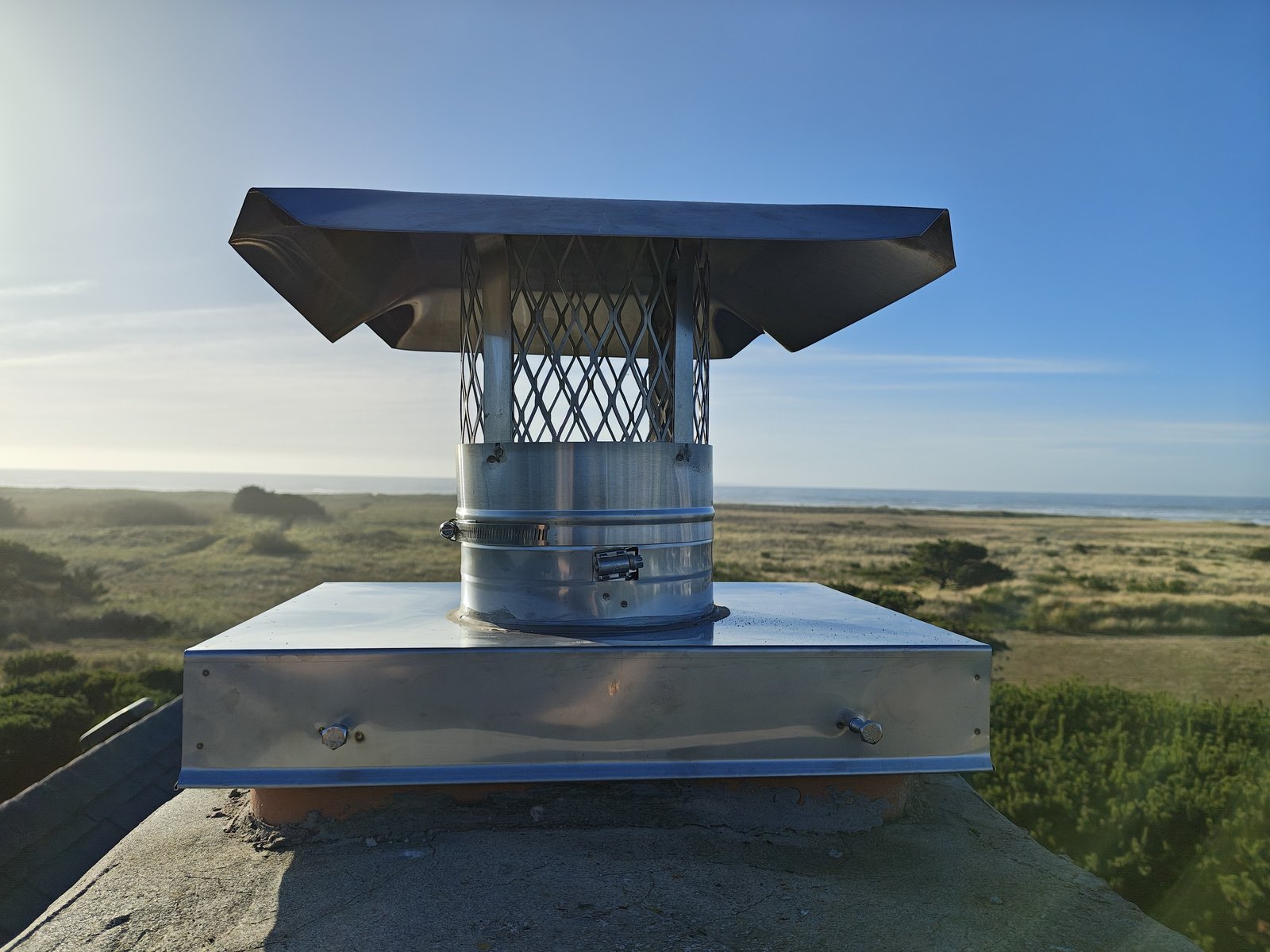
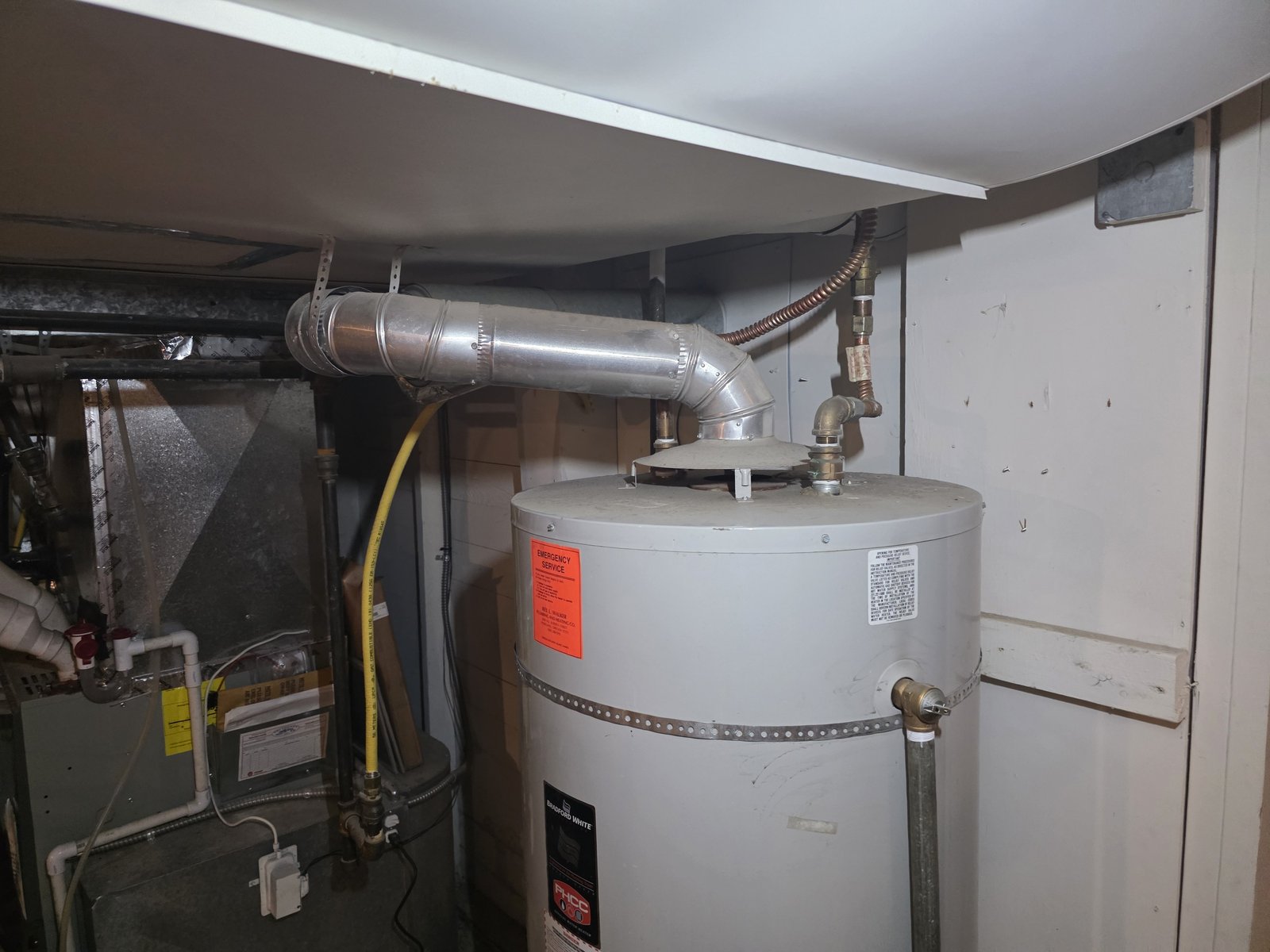
Liner installation photos
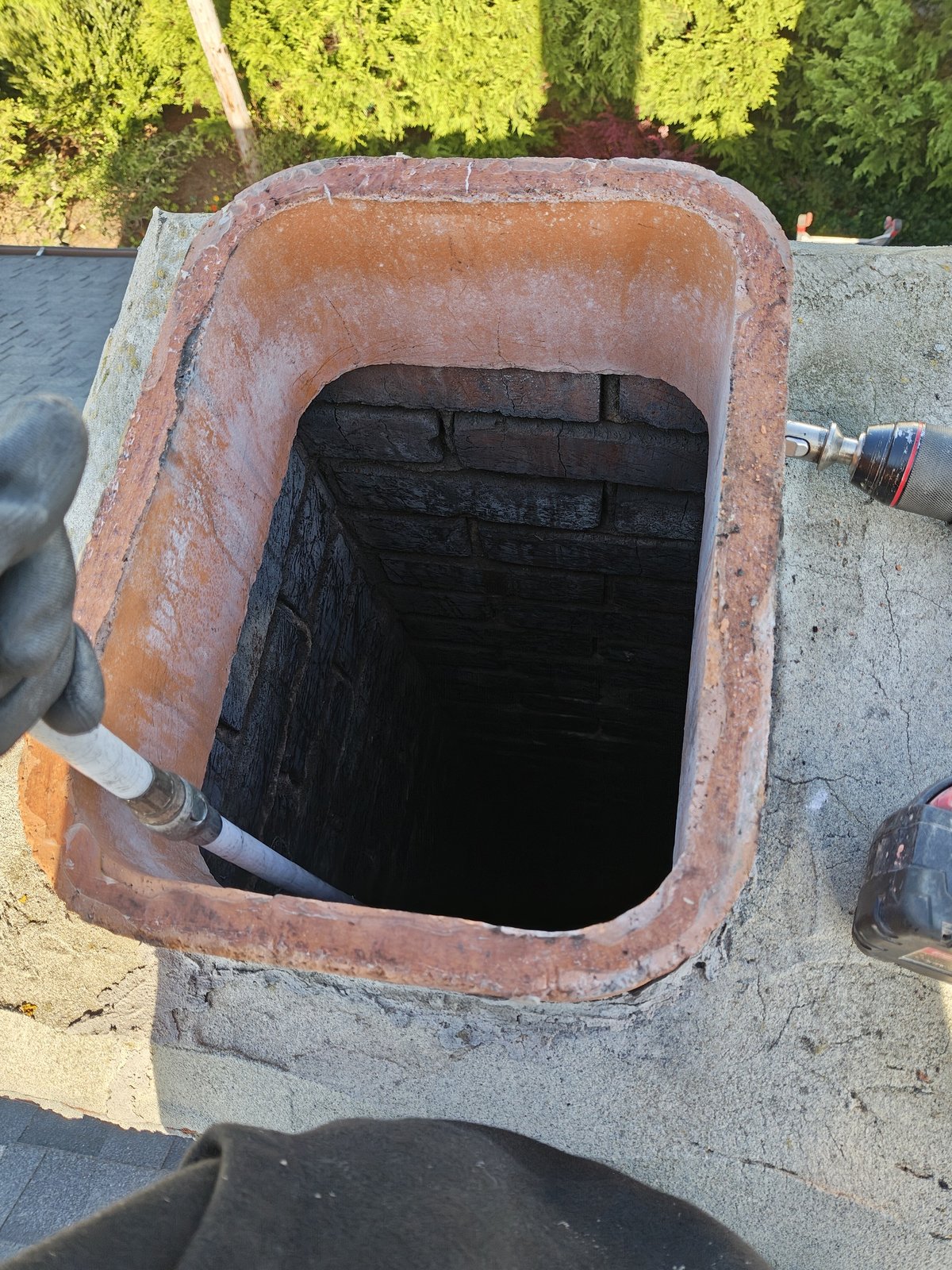
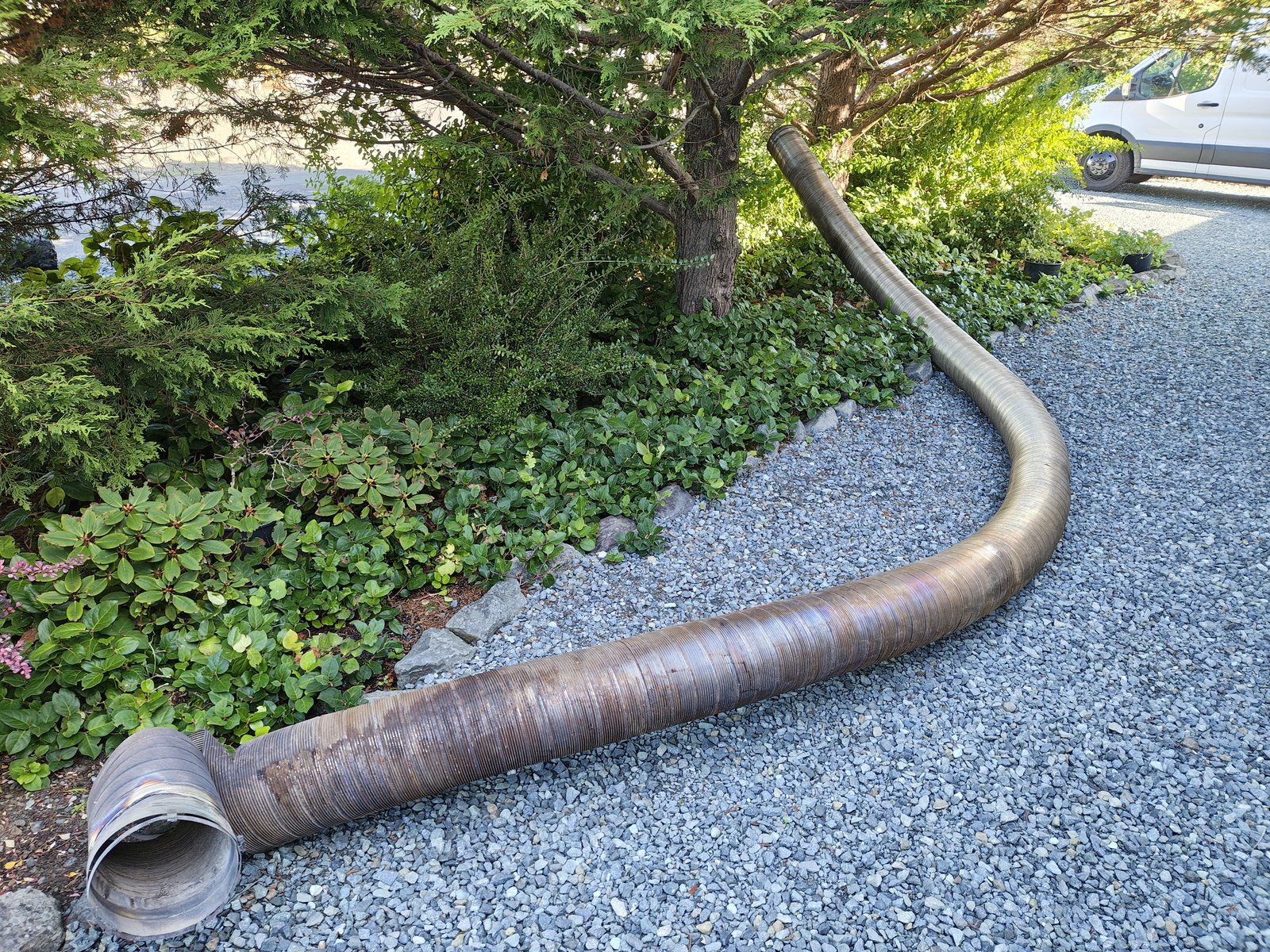
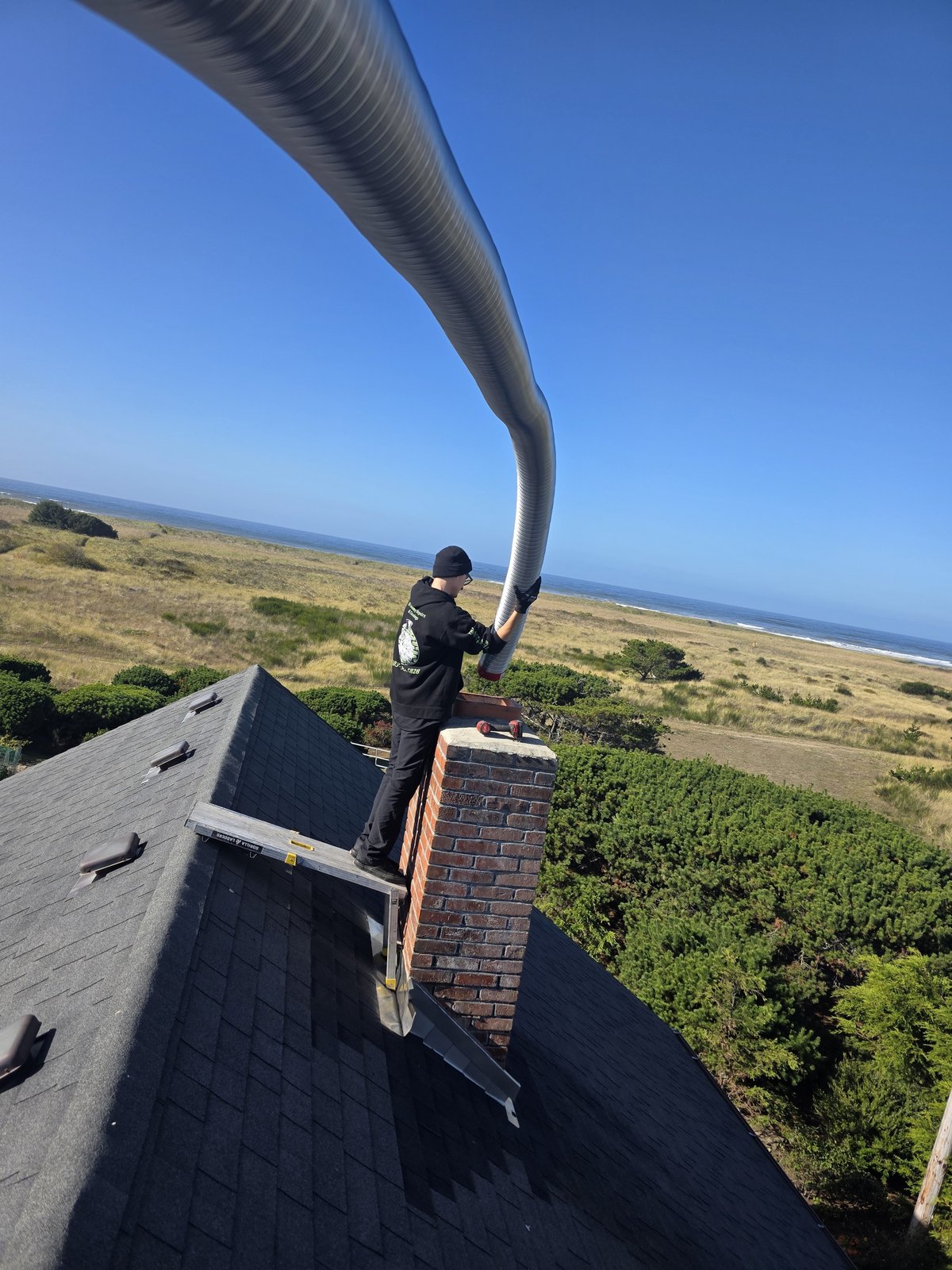
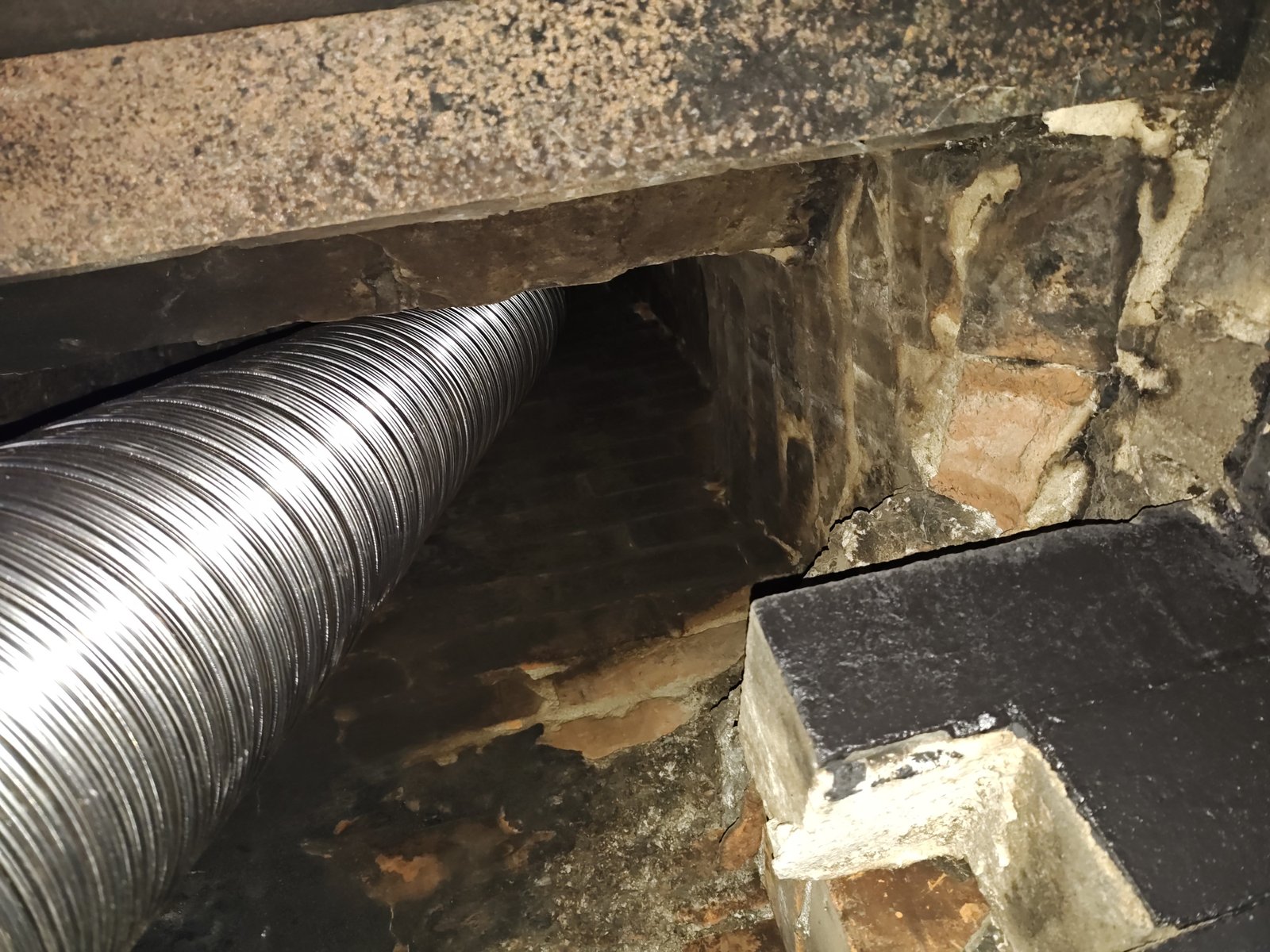
A stainless liner install, from the open flue to the finished cap. Tap a photo to enlarge.
Request an evaluation
Use our contact form and include your address and whether you are preparing to sell, buy, or repair. Or call (503) 933-5828.
Chimney inspection levels (plain language)
Chimney professionals often describe three inspection levels used in industry practice (CSIA guidance referencing NFPA 211). Full NFPA text is typically accessed through NFPA publications; the summary below is for homeowner orientation.
- Level 1 — Routine check for continued use under similar conditions; readily accessible areas.
- Level 2 — Deeper check when conditions change, before lining, around property transfer, or after events likely to have caused damage; includes broader accessible areas and video/camera examination of the flue where possible. It does not authorize tearing into finished construction just to look around.
- Level 3 — Targeted look at specific concealed areas when Level 1 or 2 cannot evaluate a particular suspected problem; may require selective opening only as needed for that investigation.
Opening a firebox or crown to install a liner is repair or alteration work—not automatically a “Level 3 inspection.” Do not treat every teardown as Level 3.
Sources (reviewed November 5, 2026)
- Oregon BCD — ORSC adoption / phase-in: oregon.gov/bcd/…/orsc-adoption.aspx
- Accessible 2023 ORSC Chapter 10 (chimneys and fireplaces), including R1003.11–R1003.12: up.codes Oregon ORSC Ch. 10
- Oregon BCD residential structures program: oregon.gov/bcd/…/residential-structures.aspx
- National Chimney M-Flex stainless steel liner kits (a liner line we install). Manufacturer installation instructions: CB & AL liner install (PDF) · DB insulated liner install (PDF)
- CSIA Level 2 inspection SOP (industry guidance): CSIA Level 2 masonry chimney PDF
- OAR 812-008-0210 (home inspector heating / chimney observation limits): OAR 812-008-0210
- OAR 812-008-0204 (home inspector not required to report code compliance): OAR 812-008-0204
Confirm the code edition that applies to your permit with the local building official. Online mirrors can lag printed integrated codebooks.
Want to see a liner job in progress? Visit Our Crew at Work.